Urban Ecology

Connect urban backyards to Australia's iconic bushland.

Native Grid collaborates with bush regenerators, native landscapers, local nurseries, and landholders to restore fragmented native plant communities and monitor ecological recovery across the built environment.

Projects

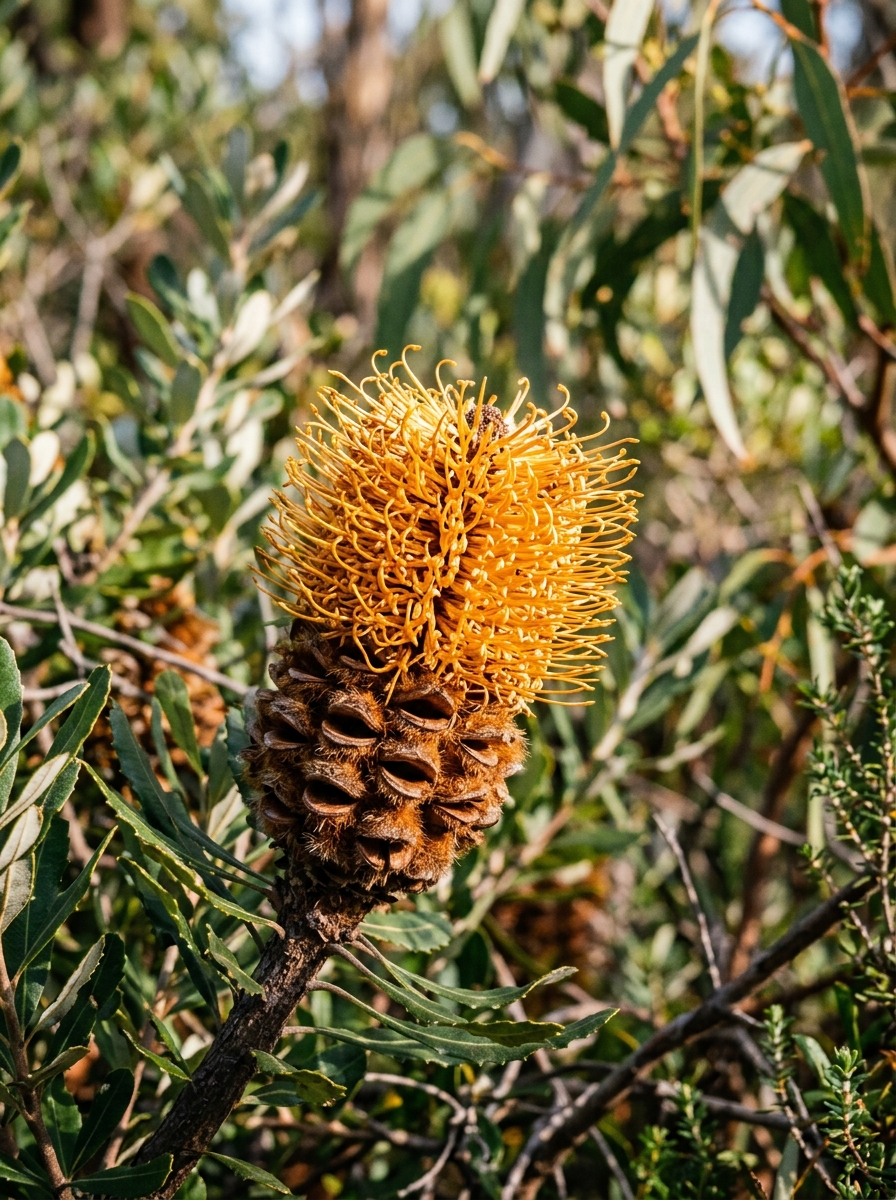
Flowering Banksia serrata cone with serrated leaves
Critical Priority
Sydney Eastern Suburbs Threatened Community

Eastern Suburbs Banksia Scrub Revitalisation

ESBS is listed as critically endangered under Commonwealth legislation. With less than 3% of its pre-1788 distribution remaining, we connect remnant pockets across coastal sand dunes and sandstone through targeted buffer plantings.

Key Species Banksia serrata, B. aemula, Monotoca elliptica
Strategy Connecting isolated public remnants with private buffer plantings
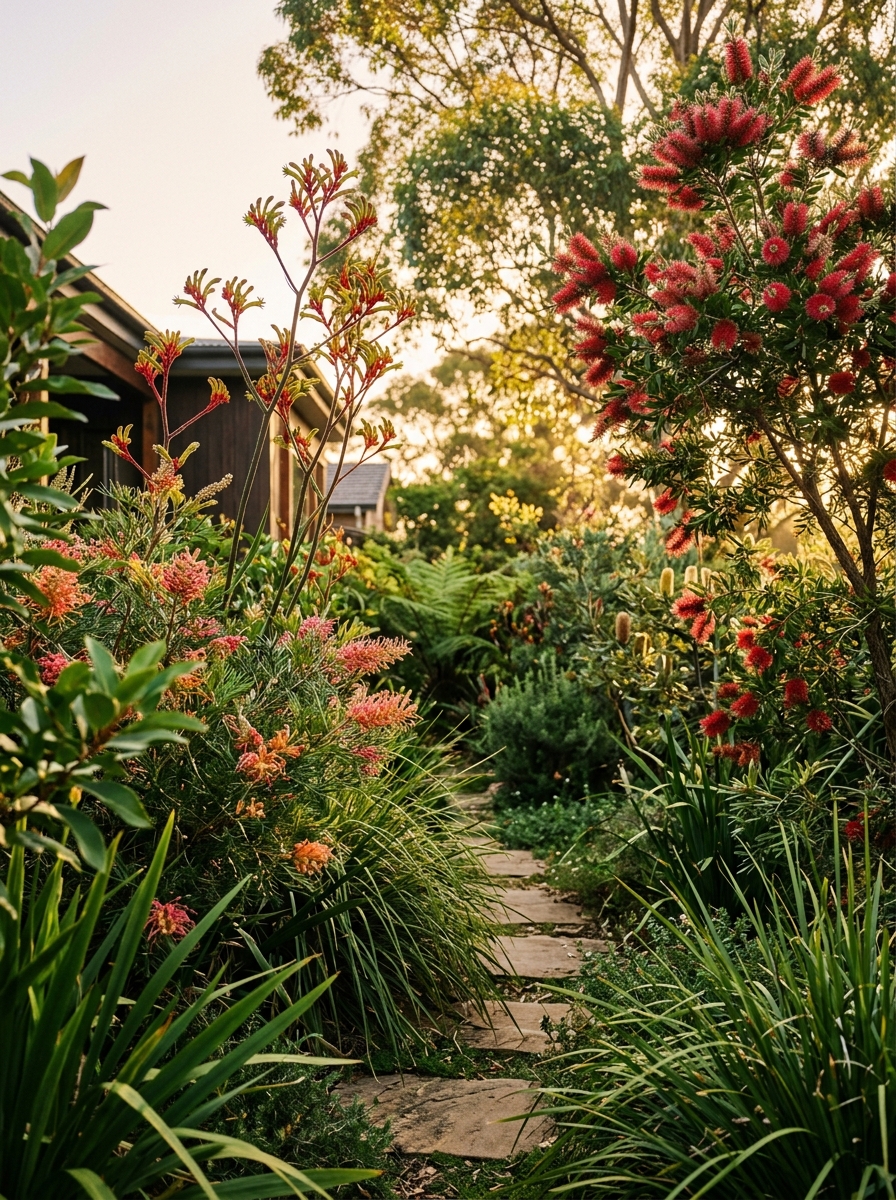
Dense Australian native suburban garden planting
Ongoing
Greater Sydney Residential Corridors

Urban Native Garden Corridors

Private landholdings account for a substantial percentage of Sydney’s land area. We consult with homeowners and landscapers to replace exotic lawns with structured native gardens sustaining local wildlife.

Key Focus Multi-tier habitat (groundcovers, shrubs, small trees)
Partnership Local native landscapers & bush regenerators
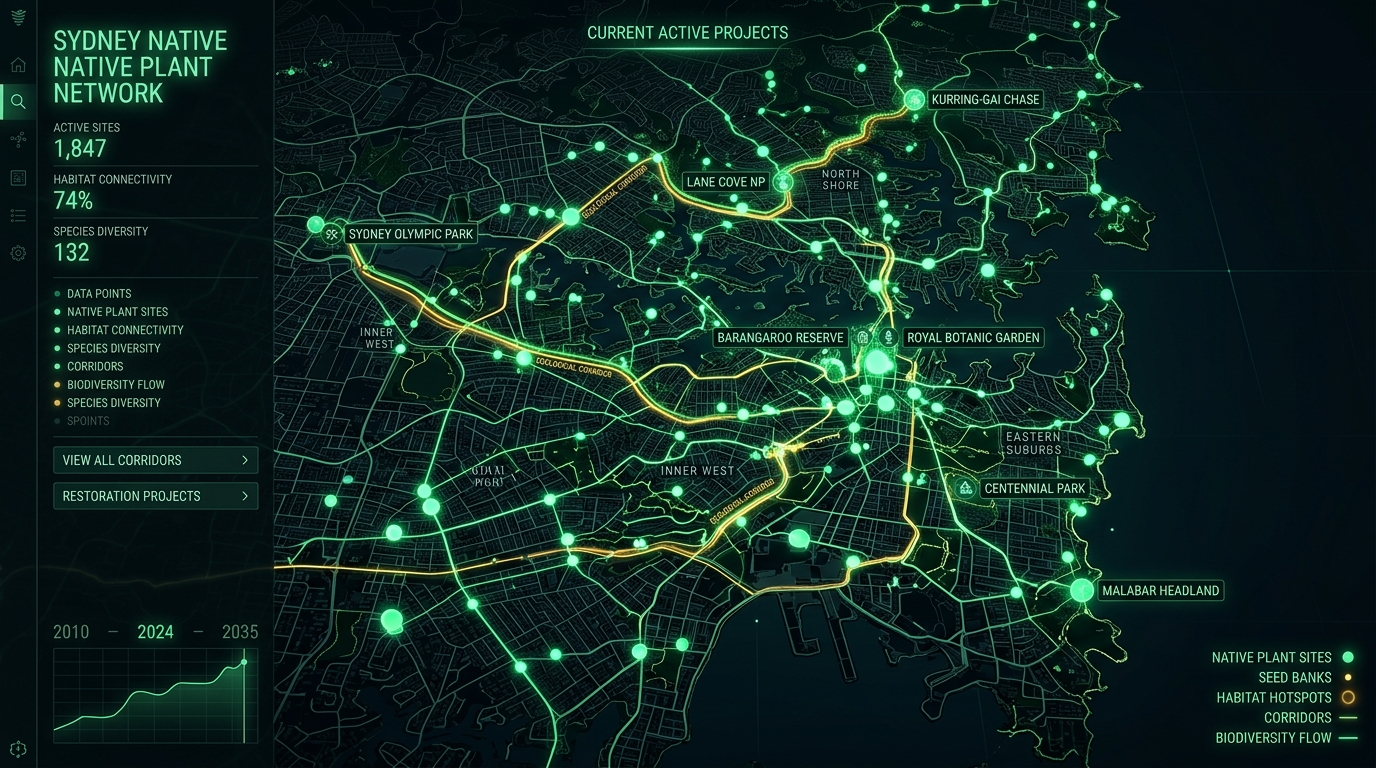
Urban geospatial map visualization
Data Initiative
Australian Cities Spatial Analytics

Urban Landscape Restoration Network Registry

Developing an open spatial tool to register and monitor revegetation sites across Australia to highlight habitat connectivity gaps and identify high-impact planting zones.

Scope Remnant patches, council reserves, private corridors
Status Site registration & dataset collation in progress

Traditional conservation often treats nature and urban environments as mutually exclusive. The goal is to view cities as vital, contiguous ecological corridors capable of sustaining rich native biodiversity across residential gardens, streetscapes, commercial developments, and remnant reserves.

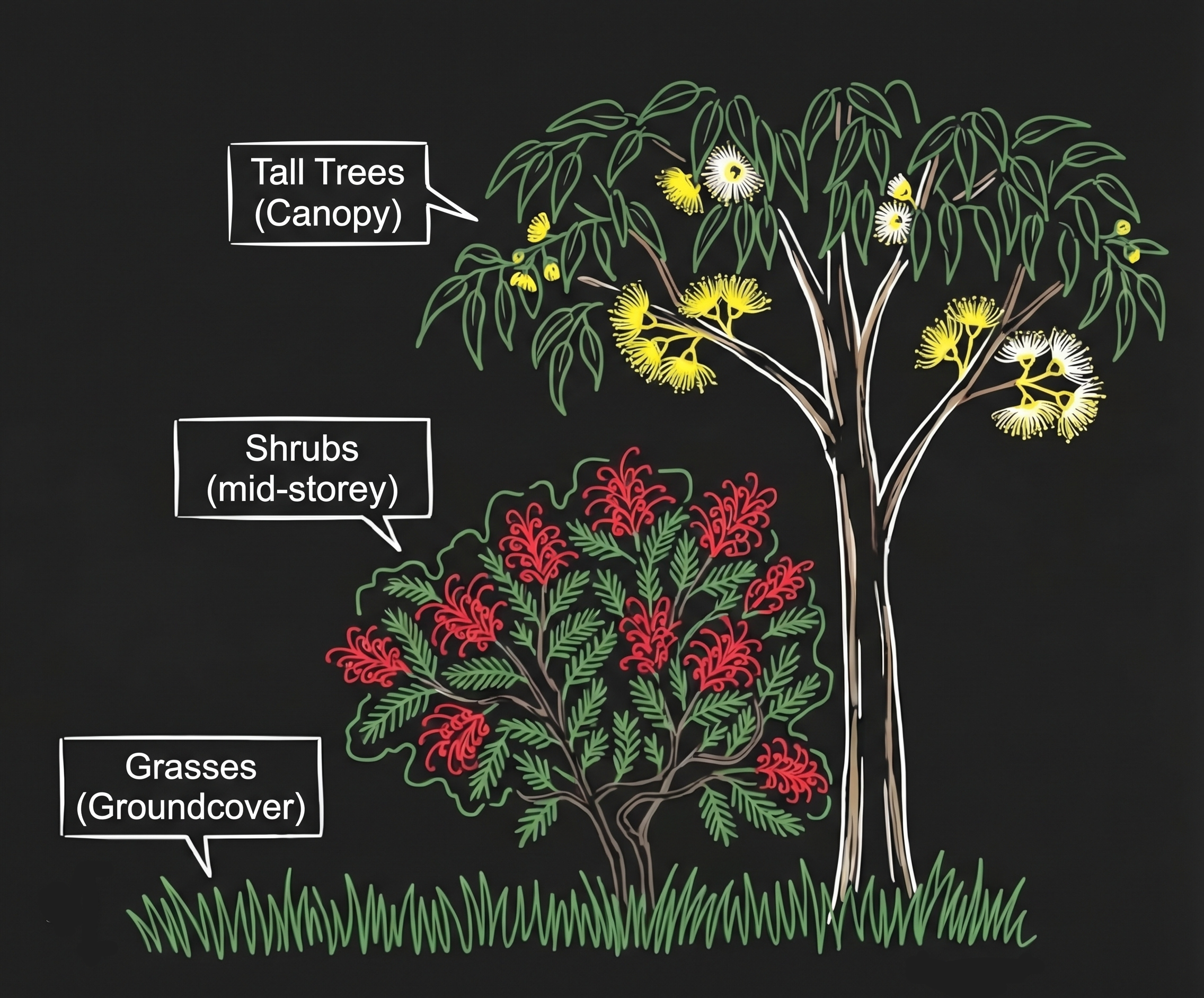
Centuries of rapid urban development across Australia have fragmented continuous bushland into isolated islands. To make urban corridors genuinely functional for wildlife, urban landscaping can't rely on manicured turf or solitary decorative trees. In nature, vegetation operates in interdependent vertical layers. Landscaping must deliberately replicate these structural tiers to rebuild resilient, biodiverse corridors:

1
Canopy Layer (Australian Trees): Tall indigenous trees like Eucalypts, Angophoras, and Corymbias provide essential urban canopy cooling, carbon capture, and the critical high vantage points and nesting hollows required by arboreal mammals, cockatoos, and raptors.
2
Midstory Layer (Bushy Shrubs & Understory): Dense native shrubs (such as bushy Grevilleas, Banksias, and Leptospermum) offer protective nesting cover against aggressive territorial urban birds (like Noisy Miners) while providing sustained seasonal nectar for small honeyeaters and native bees.
3
Groundcover Layer (Grasses & Prostrate Plants): Native grasses, sprawling groundcovers, and undisturbed leaf litter bind topsoil, conserve moisture, reduce runoff, and shelter the diverse insect and reptile populations that underpin the entire food web.

By weaving together all three layers across private properties and civic open spaces, we turn fragmented urban patches into continuous corridors of life. Native Grid consults with landholders, ecological landscapers, architects, and local councils to plan and deliver site-proven restoration roadmaps with measurable biodiversity outcomes.

Hand-drawn diagram of Australian native habitat layers: Eucalyptus (Canopy), Grevillea (Midstory), and Grasses (Groundcover)
Natural Stratification: In native Australian bushland, biodiversity thrives through vertical structural layers—groundcover grasses, dense midstory shrubs, and canopy trees—working as an interconnected ecological corridor.

Effective urban restoration relies on accurate baseline data, careful provenance selection, and sustained post-planting monitoring.

1

Botanical & Site Assessment

Evaluation of existing soil conditions, remnant species, weed competition, and proximity to wildlife corridors.

2

Provenance Sourcing & Species Palette

Developing planting palettes matched to historical vegetation mapping (such as Sydney Sandstone Gully or Coastal Sand Scrub) using stock sourced from local genetic provenance.

3

Biodiversity & Impact Documentation

Formal assessment reports that detail expected ecological benefits, habitat structure, and environmental impact.

4

Ecological Tracking

Monitoring canopy establishment, soil health, natural recruitment, and fauna interaction across established restoration plots.

Why Indigenous Provenance Matters in Sydney

Generic "Australian natives" or exotic plants purchased from big retailers are often hybrids or cultivars unsuited to local soils and fauna. Planting local endemic plants preserves unique evolutionary adaptations and provides the exact nectar, pollen, and seed sources that local insect and avian have evolved with.

•
Sandstone Ridge Communities: Adapted to low-nutrient, well-draining soils with high drought resilience.
•
Coastal Sand Scrub: Highly salt-tolerant species capable of binding loose sand and resisting high winds.
•
Micro-Fauna Dependencies: Native bees and host butterflies depend strictly on particular plant genera.
Sydney Urban Ecology

Visualising Sydney’s emerging green network.

We are aggregating public and private restoration sites to map ecological corridors across the Sydney basin. If you manage a native restoration project, community patch, or residential habitat garden, get in touch to include your site in the registry.

Corridor Analysis

Identifying bottlenecks between national parks, council reserves, and private properties.

Species Distribution

Documenting remnant flora populations and targeted re-introductions.

Cross-Sector Collaboration

Connecting bushcare volunteers, private landholders, and professional regenerators.

Enquiries & Consultations

Work with us

Whether you are an architect planning a new landscape, a landholder seeking a biodiversity report, or a bush regenerator looking to coordinate plantings, we welcome your enquiry.

Consultancy & Biodiversity Reports

Formal assessments for residential, commercial, or public landholdings across Greater Sydney.

Industry & Nursery Partnerships

Collaborating with local indigenous nurseries and qualified bush regeneration teams.

Mapping & Data Collaborations

Contributing vegetation survey data or registering your site with our spatial map.

Send an Enquiry

Nature of enquiry *